- Home
- Basics
Isometrics Basics: What They Are, Why It Works, & Where It Fits
I have been a lifetime advocate of Isometric Training. For over 20 years, I've dedicated myself to the practice of Isometric exercise. It transformed me from a skinny, weak, wet-noodle-armed teen to a hulking, muscle-bound strong man, able to lift 1,000 lbs in weight. I've used Isometrics to transform and improve the lives of thousands of people.
Following a severe car accident, I was diagnosed with Multiple Sclerosis, a progressive, degenerative neurological disease, with no known cure.
- It robbed me of my strength.
- It robbed me of my power.
- It robbed me of voluntary muscle control.
- I was left weak as a newborn kitten and unable to walk with out assistance from a stick.
I changed that with Isometrics.
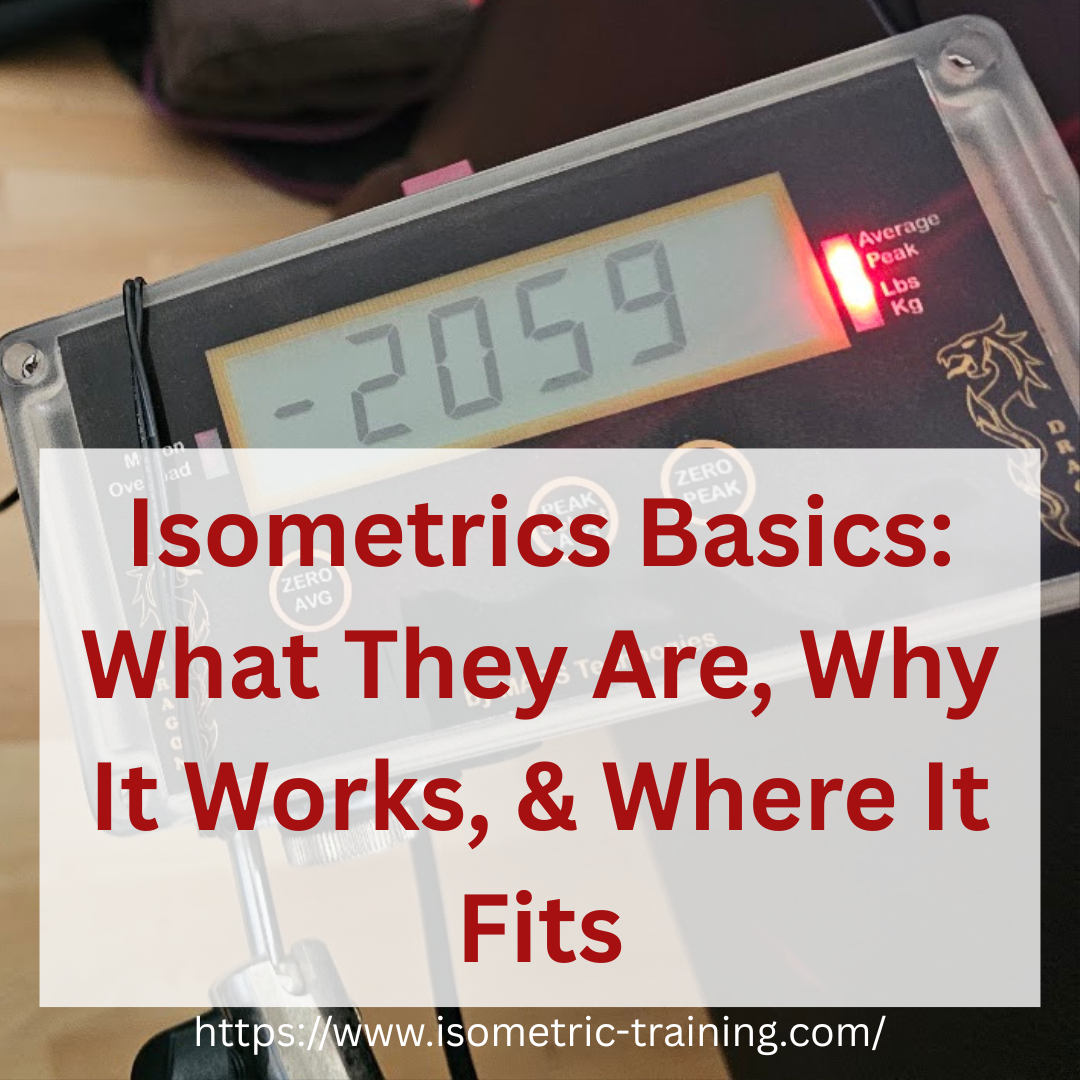
I started with my Isometrics Basics and rebuilt my body. The above image is a readout from an Isometric leg press I performed. I was able to press 2,059 lbs. My legs are like steel again and capable of pressing over a ton of weight. That is the type of life changing strength I want to share with you.
If you've ever pushed hard against a wall, braced your gut against a heavy box, or gripped a steering wheel and pulled like you really meant it - you've done isometric training. Not a warm-up for real training. Not a poor man's substitute. The actual thing. The real-deal Pat MacNeal.
This page is the straight answer on isometrics basics: what they genuinely do well, how they work, how they compare to the training you already know, and where they fit in the life of someone who has a job, a family, and maybe twenty minutes on a good day. No miracle claims. Just what the method is worth and how to use it.

What Isometric Training Is Genuinely Good For
Let's start with the honest case for isometrics, because it's strong enough that it requires neither exaggeration nor inflation. I have been practising and teaching Isometrics for over 20 years now.
- Isometric training is one of the most time-efficient methods for developing maximal strength. It allows the nervous system to practise producing near-maximal force with minimal movement, equipment, and fatigue. By concentrating effort directly on force production, isometrics deliver a powerful strength stimulus in a fraction of the time required by many traditional training methods.
- Isometrics build usable strength by teaching the nervous system to fully access and control muscular force. Research from Erich A. Müller’s pioneering work in the 1950s through to modern systematic reviews such as Ghayomzadeh et al. (2025), Oranchuk et al. (2019) and Lum & Barbosa (2019) shows that maximal isometric contractions increase motor unit recruitment, neural drive, and force production more efficiently than many traditional methods for developing static strength. By training the ability to create maximum tension without relying on momentum, isometrics build deeper muscular control, greater joint stability, and the confidence to express strength under real-world demands - when you need it.
Simply put, when you push hard against something immovable for seven to twelve seconds, you recruit a very high percentage of the available muscle fibres in that position. Often more than you'd recruit during a normal moving rep, because nothing is limited by the weakest point of the movement or by momentum. That's not a gimmick. It's one of the oldest and best-documented findings in strength research, and it's why physical therapists, martial artists, and strongmen have used static holds to develop real-world strength for centuries.
Here's what that means in practical terms
- Isometrics fit into real life. A complete isometric session can run five to fifteen minutes and needs a wall, a doorframe, a towel, the floor, or just you. There is no commute, no equipment to store, no reason a hotel room, your living room, or your office doesn't count. If your training keeps dying because life gets in the way, isometrics remove most of the places it can die.
- They're unusually joint-friendly. Because the joint doesn't move under load, isometrics let you build strength without the repetitive friction that aggravates cranky knees, shoulders, and elbows. This is exactly why rehab professionals reach for them first. They are why I teach them to my patients in clinic — and why they work so well for adults who want to train hard without paying for it the next morning.
- They build strength you actually use. Bracing, gripping, holding, resisting - most of the demanding physical moments in adult life are isometric. Carrying something awkward across a parking lot. Holding a ladder steady. Stopping a kid or a dog from launching into the street. Static strength is not abstract gym strength. It's the strength of staying planted when something is trying to move you. For me, it is the strength that allows me to walk, to compete as an elite-level martial artist, and still lift stupidly heavy things with ease.
- They teach maximal effort safely. Pushing at 100% against an immovable object is one of the few ways to train truly hard with almost no technical skill requirement and very low acute injury risk. You can't drop a wall on yourself.
Isometric Contractions Explained
Strip away the terminology, and an isometric contraction is simple: the muscle produces force, but the joint doesn't move.
Every muscular contraction you can do falls into one of three categories.
- When a muscle shortens under load - curling a weight up - that's a concentric contraction.
- When it lengthens under load - lowering the weight back down - that's an eccentric contraction.
- When it produces force but stays the same length - pushing against a wall that will never move, holding a weight perfectly still, or pressing against your own limbs - that's an isometric contraction.
Here's the part that surprises people: your muscles don't know whether the resistance is moving. They only know how hard they're being asked to work. When you press into an immovable wall at maximum effort, your nervous system sends the same "recruit everything" signal it would send against a genuinely heavy weight. Tension is the stimulus. Movement is optional.
That's the whole mechanism, and it's why the method works. Strength adaptation follows tension and effort. An isometric hold done at high intent generates enormous tension - it just does it without the joint travel, the momentum, and the impact.
The first time I really understood this wasn't in a book. It was in a karate class. My instructor had me raise my arm in "age-uke", an upward block, and he pressed down on my arm. I had to press with everything I had, trying to move him - but he was immovable. After about 10 seconds, my shoulder was on fire.
Then he told me to relax, and I slowly eased off the pressure. He told me to shake my arm out. I did. Then something odd happened. My arm started floating back up of its own accord! After that, I was able to block far faster than I previously could.
That was the moment "tension without movement" stopped being theory and became something I could feel.
What I experienced was a classic example of post-isometric potentiation (PAP) combined with neuromuscular activation and altered proprioceptive feedback.
You see, during a normal movement, your brain often uses only the amount of force required for the task. It does not fully "turn on" every available muscle fibre. But through that isometric contraction, I pushed my nervous system to recruit a very high percentage of the available motor units in your shoulder muscles.
When I relaxed, those pathways did not instantly return to their previous baseline, and I was briefly capable of producing more force with less conscious effort.
What I didn't understand at the time (I was a kid!) was that I had changed my biochemistry too! Now I know that through that maximal contraction, my calcium handling became more efficient. My contractile proteins had become more sensitive to the calcium in my system, increasing my nervous system's efficiency at sending signals. (This is now a major focus for me in my personal Isometric training).
Maximum effort without movement teaches the nervous system how to access force.
Learn more about How Isometric Training Works:
- Isometric Contraction - How your body builds muscle, burns fat and more in just seven seconds.
- Isometric Exercise - Sculpt Your Body Without Weights.
- What is Isometrics? Understanding the Past to see the Future of Fitness
- Using Isometrics to Build Muscle - Fast and Effective Muscle Gain in Only Minutes
- Examples of Isometric Exercises - The Versatility of Still Exercise
- Conscious Isometric Contractions - Do You Have the Power?
The Drawback
To me, that early experience seemed like magic. My arm suddenly felt lighter, stronger, and more responsive...but what had truly happened was equally astonishing. The contraction had temporarily awakened my nervous system's ability to recruit and control my shoulder muscles, making my arm feel lighter and easier to lift. I wasn't gaining new strength in ten seconds - I was accessing strength that was already there but not fully available.
This is one of the reasons many traditional martial systems have used forms of isometric tension training, even before modern neuroscience explained why it worked.
And speaking of neuroscience, there are two things worth knowing about how the strength you do develop through isometrics carries over.
- Isometric strength is somewhat angle-specific - you get the most gain at the joint position you train, with meaningful carryover roughly fifteen to twenty degrees to either side. That's not a flaw; it's a dial. It means you train the positions that matter (or train two or three specific angles to get complete strength activation carryover) rather than pretending one hold covers everything.
- Effort matters more than duration - a genuinely hard seven-to-twelve-second push does more for strength than a lazy sixty-second lean.
For all its advantages, isometrics has traditionally had only one significant drawback: a lack of direct, objective feedback. For many years, there was no reliable way to measure the intensity of an isometric contraction, making it difficult to know whether you were truly progressing from one session to the next.
That began to change in the 1950s when Bob Hoffman, the legendary American Olympic weightlifting coach, experimented with using heavy weights and a power rack to provide a rough measure of isometric strength. Later, in the early 1990s, Pete Sisco and John Little refined the idea and developed a practical system that made objectively measuring isometric strength far more accessible.
The principle was straightforward. Imagine you're training the chest with a bench press. You position the bar in a power rack just a few inches below lockout, load it with an extremely heavy weight that you cannot actually lift, and then press against the fixed bar as hard as possible for a set period of time. If you become strong enough to move the bar to that position under control, you simply increase the weight. While simple, it was an innovative step forward because, for the first time, people had a practical way to quantify their isometric strength.
Unfortunately, many people focused solely on pushing harder without first learning how to contract the target muscles properly. They often experienced rapid early gains, but once those easy neurological improvements had been made, progress slowed, and many reached a plateau.
More recently, specialist equipment has taken this idea even further. Machines such as my Dragon Gym measure the force you produce during an isometric contraction in real time, allowing you to set precise targets and track progress with remarkable accuracy. They're excellent tools - but the truth is, you don't need expensive equipment to benefit from isometric training.
Strength can be measured in many practical ways. Some of my students use bodyweight benchmarks such as maximum push-ups, handstand push-ups, front levers, flags, or other feats of strength to test their progress. Others measure improvements in traditional lifts or simply notice that everyday tasks become easier.
Changes in muscular development can be tracked with a tape measure or body fat callipers, while improvements in cardiovascular fitness can be monitored through resting heart rate, a heart rate monitor, a fitness tracker, or even your smartphone.
Ultimately, the most important measure of progress isn't what a machine tells you - it's what your body is capable of doing today that it couldn't do a few weeks ago.
Learn more about Isometric Drawbacks and Doubts:
- The Disadvantages of Isometrics - So what can’t Isometrics do?
- Isometric Training Frequency Doubts - Isometric Training FAQ 15
Isometric vs. Isotonic Training
And now, that I've introduced lifting weights into this discussion, perhaps I should clear up another common misconception.
Isotonic training is the moving kind, things like push-ups, squats, rows, presses, anything where the joint travels through a range of motion. It's what most people picture when they hear the word "exercise," and it's a good tool. So let's compare honestly instead of pretending one method wins everything.
Isotonic training is generally better at learning to use strength through a full range of motion, developing coordination and movement skill, and, with sufficient volume, building muscle size at the fastest possible rate. If your goal is a bigger squat or a more athletic movement pattern, moving reps have to be part of the picture.
Isometric training is better at producing maximal tension at a specific joint angle, punching through sticking points, training around painful ranges, building tendon resilience, developing grip and bracing strength, and fitting into pockets of time and space where moving training simply can't happen.
The mistake people make is treating this as a war. It isn't. To borrow an idea from Miyamoto Musashi, a carpenter doesn't argue about whether the hammer or the saw is the superior tool; he asks what the job needs today. If you have access to weights and time, use both. The Isometrics I teach slot cleanly around moving work. If you're in a season of life where the gym isn't happening, isometrics alone can maintain and build real strength for months, which is a far better outcome than the all-or-nothing cycle of training hard for three weeks and then doing nothing for two months.
I've watched that cycle break more capable men than any injury has.
The guy who insists "if I can't do it right, I won't do it at all" ends up doing it not at all.
The guy who does ten hard minutes of holds in his kitchen on the days the gym is impossible stays strong, stays in the habit, and walks back into heavier training - when life allows it - without starting from zero.
Consistency at 80% beats perfection at zero, every single time.
Learn more about Isometrics Vs Isotonic Exercises:
- Charles Atlas and Isometrics - The World’s Most Perfect Man never taught them
- Isometrics and Weight Lifting - How the Science of not Moving a Muscle means Lifting More
- Isometrics Versus Traditional Lifting - Looking at the Myths of Muscle Gain
- Strength Training Versus Bodybuilding - Learn the Difference and Learn the Secrets to Success
Isometrics vs. Stretching: They're Not the Same Thing
This confusion comes up constantly, and it's understandable. From the outside, a person holding a static position could be doing either one. But they're close to opposites.
Stretching puts a muscle in a lengthened position and asks it to relax and tolerate that length. The goal is range of motion. The sensation is pulling and gradual release.
Isometrics put a muscle at a fixed length and ask it to contract as hard as the plan calls for. The goal is strength and tension. The sensation is effort, muscles working hard, sometimes shaking like a leaf in an earthquake, while nothing moves.
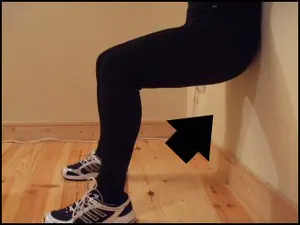
A wall sit is not a stretch, even though you're holding still. Your quads are firing hard the entire time. A relaxed hamstring stretch is not an isometric, even though nothing is moving; the muscle is being lengthened, not contracted.
Both have a place. Stretching keeps ranges available; isometrics build strength you can use inside those ranges. If you only have time for one and your goal is to feel strong, capable, and hard to injure, isometrics deliver more per minute, and interestingly, hard isometric work in deep positions tends to improve usable flexibility on its own, because the nervous system grants range more willingly to positions it trusts you to be strong in.
Learn more about Isometric Stretching Methods:
- Isometric Stretching - The Secret to Safe Instant Flexibility
- How to Isometrically Stretch - Double Your Flexibility in Minutes.
Getting Started: The Beginner's Route In
You don't need a program with forty exercises. You need a handful of stable positions, a clear effort standard, and a schedule you'll actually keep. Here's the shape of a sane, effective, start.
- Pick four holds that cover the body. A wall sit for the legs. A glute bridge hold for the hips and posterior chain. A forearm plank for the trunk. A standing wall press for the pushing muscles. Every one of these is stable, learnable in under a minute, and impossible to do dangerously wrong.
- Use two kinds of effort. For the positional holds (wall sit, bridge, plank), hold for 20 to 45 seconds at an effort that feels genuinely working but controlled, around a seven out of ten of perceived rate of exertion. For the wall press, push hard for 7 to 12 seconds at an eight or nine out of ten, rest, and repeat two or three times. Breathe throughout. Never hold your breath. Exhale steadily through the effort, like you're pressing air out through a straw, making an "FFFFFF" OR "SSSSSS" sound.
- Train three days a week, on days you name in advance. Monday, Wednesday, Friday works. So does Tuesday, Thursday, Saturday. The specific days matter less than the fact that they're specific. "When I get a chance" is where training goes to die.
- Track one number. Hold duration on the wall sit, or how the fourth wall press feels compared to week one. Progress in isometrics is real but quieter than adding plates to a bar, so you need a written record to see it. When the wall sit that shook you at 25 seconds becomes solid at 45, that's not your imagination. That's strength.
- That's a complete, legitimate starting month. The full walkthrough, setup, form cues, breathing, weekly structure, and how to progress lives in my Ultimate Isometrics for Beginners Guide, and that's the right next page if you're ready to start.
Debunking Isometric Training Myths
A few misconceptions deserve a direct answer, because they're the ones that make sensible people dismiss the method.
- "Isometrics don't build real strength." This is demonstrably false. Of course they do. The strength gains from maximal isometric training are well documented in research going back to the 1950s and confirmed in modern studies. What's true is that the strength is strongest at the trained angles and that isometrics alone build muscle size more slowly than high-volume moving work. Those are honest limitations, not evidence the method is fake.
- "They're only for rehab." Rehab professionals love isometrics because they're controllable and joint-friendly; it's why I teach them to my clinical patients, but those same qualities are exactly why they work for healthy, busy adults. The method didn't come from rehab clinics anyway; it came from strongmen and strength coaches. Rehab borrowed it because it works.
- "If nothing moves, nothing's happening." Tension is the stimulus, not movement. Anyone who believes nothing is happening during an isometric is invited to hold a proper wall sit for sixty seconds and report back. ;-)
- "You need special equipment to do it right." This is the one that costs people money. I bought into a "complete system" myself once - a strap-and-handle contraption with breathless marketing about revolutionary results - and the honest truth is that everything it did, a doorframe, a towel, a wall, my own body already do it for free. The equipment industry needs you to believe the method lives inside the product. It doesn't. It lives inside the effort. If a device makes a position more comfortable for you someday, fine, but nobody needs one to start, and nobody should feel behind for not owning one.
Learn more about Isometric Training Equipment
- Do Not Buy a BullyXtreme - Why I Do Not Recommend, Endorse or Affiliate with BullyXtreme
- Isometrics and SCT - Pete Sisco and Static Contraction Training
- Static Contraction - An Introduction to Measured Isometrics
- Problems with Static Contraction - 3 Big Problems Explained and Overcome
- The Final Problem with Static Contraction Training - and the Solution!
Safety: Blood Pressure, Joints, and Knowing Your Boundaries
Isometrics are among the safest ways to train hard, but "safe" doesn't mean "no rules." Two topics deserve straight talk.
Blood pressure. Hard static effort raises blood pressure sharply during the hold - more than moving exercise does - and holding your breath amplifies it significantly. That pressure spike is temporary and, for healthy people, part of the training stimulus. In fact, controlled research on moderate isometric protocols (things like timed wall sits and handgrip holds) shows they lower resting blood pressure over weeks of practice. Some analyses rank them among the most effective exercise approaches for doing so. Both things are true: the acute spike is real, and the long-term adaptation is favourable.
The practical rules are simple.
Breathe continuously through every hold, never strain against a closed throat, and if you have diagnosed high blood pressure, heart disease, or you're on cardiovascular medication, talk to your doctor before adding maximal-effort holds; moderate ones are usually where you'll be told to start anyway.
Joints and pain. Isometrics are gentle on joints precisely because nothing moves, but muscular effort and joint pain are different signals, and you need to be able to tell them apart. Muscles working hard, burning, even shaking, that's effort, and it's fine. Sharp pain, pain inside the joint itself, pain that lingers after the hold, dizziness, or pressure in your head - those are stop signals, full stop. You don't push through them, and you don't need to: one of the genuine advantages of isometrics is that you can almost always find a nearby angle or an easier position that works the same muscles without provoking the problem.
I hold a hard line on this with everyone I've ever coached, and I'll hold it with you: pain denial is not toughness. Toughness is training consistently for the next twenty years, and the men who manage that are the ones who learned to work hard and smart at the same time. If something specific is going on, a cranky shoulder, a knee history, a blood pressure diagnosis - my deeper pages on Isometrics and Blood Pressure and Isometrics for Joint Health cover those situations properly, without turning this page into a medical pamphlet.
Where to Go Next
You now have the foundation: isometrics are a legitimate, research-backed way to build strength; they work through tension rather than movement; they complement moving exercise rather than competing with it; and they fit into the exact pockets of time and space that busy adult life actually offers.
The next step is to stop reading about it and do a first session - a real one, with structure, so that in two weeks you can look at a number and know it's working.
You've been reading about Isometrics Basics, go deeper with these articles...
Charles Atlas and Isometrics
Charles Atlas and Isometrics - The Worlds Most Perfect Man never taught them
The Benefits of Isometrics
The Benefits of Isometrics - Aside form being the most efficient, productive workout possible what else can Isometrics do?


Paul “Batman” O’Brien is a personal trainer, elite athlete coach, and martial arts medalist who has spent 20+ years teaching science-based, old school, joint-friendly isometric training for busy people. He has written 400+ articles, created 32+ books and programs, and worked with 3,000+ clients. After an MS diagnosis, he used isometrics to get off a walking stick and return to competition for Ireland. Connect with Batman on Facebook. He also makes charity appearances in the Batsuit and folds origami.

My Top Selling Strength & Physique Sculpting Program

Leave your name and email address below to receive Free Access to
Exclusive Isometric Ebook, Instructional Videos and Bonus Exclusive Subscriber Downloads from my 7 Seconds to A Perfect Body Program
Subscribe Now Below!
Recent Articles


-
Isometric vs Isotonic Training
Aug 17, 26 08:47 AM
 Isometric vs isotonic training compared honestly: what each does best, where each falls short, and how a busy adult should choose or combine them.
 -
Isometric Exercise Benefits: What Each Hold Gives You
Aug 14, 26 05:45 PM
 What specific Isometric Exercise Benefits: wall sits, planks, grip holds, and maximal wall presses develop, easily explained
 -
Isometrics Basics: What They Are, Why It Works, Where It Fits
Aug 11, 26 09:23 AM
 Plain-English guide to isometric training: what it is, how it works, why it matters, and where it fits for busy adults who want practical strength.