Isometric vs Isotonic Training
- An Honest Comparison -
The short answer on isometric vs isotonic training:
Isometric (static) exercise is the fastest and most efficient method to build strength, working around joint pain, building tendon resilience, and fitting into a life with no gym time.
Isotonic (moving) exercise is better for using strength over a full range of motion and building muscle size at the fastest rate.
They're complementary tools, not rivals, and the right question isn't "which is better" but "which does the job in front of me."

The Difference Between Isometric vs Isotonic Training in Plain English
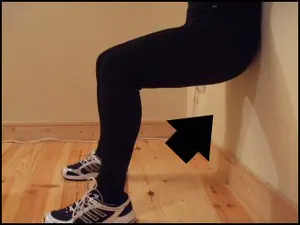
Isometric training is any exercise where the muscle produces force, but the joint doesn't move. For example, pushing against a wall, holding a plank, or gripping hard. Your muscles can't tell whether the resistance is moving; they only register how hard they're working. That's why both methods build real strength: tension is the stimulus either way. Isometrics provide the largest tension stimulus in the shortest amount of time.
Isotonic training is any exercise where the joint moves through a range of motion, like push-ups, squats, rows, curls. The muscle shortens on the way up (concentric) and lengthens under control on the way down (eccentric). Any of these can be made Isometric simply by holding a given position statically; however, there are optimal angles, positions, and hold times.
Where Isotonic Training Wins
Moving reps build strength through the entire range of motion and allow you to develop coordination and movement skill. With enough volume, they can build muscle size faster than any other method, but not as efficiently.
If it's a case of isometric vs isotonic training, you'll spend longer in the gym itself working out to build a quarter inch on your biceps using isotonic curls, but you'll see that pump in your in about 4 weeks.
If your goals include a bigger squat, athletic movement, or maximum muscle mass, moving work needs to be in the picture.
Where Isotonic Training Fails
However, there are very serious drawbacks to isotonic training that get glossed over far too often by gym bro's and dude in their twenties only concerned with looking great without a shirt. The debate on Isometric vs Isotonic Training methods isn't as clear-cut as it first may seem, and unlike many who walk through my clinic door today with busted shoulders, elbows, hips, and knees, I was aware of the drawbacks of isotonic methods from the jump.
First and foremost...
Joint Shearing and Compression
When you are performing any weight-lifting activity, during that isotonic movement, the external load has to be accelerated, decelerated and redirected. This means that your muscles don't simply produce force against resistance; they also create forces that are transmitted through the joint.
For example, during a squat, leg extension or pressing movement, the contracting muscles generate:
- compressive forces through the joint surfaces
- shearing forces between joint structures
- rotational forces
- forces associated with stabilising the joint against the moving load
This isn't necessarily pathological negative. Healthy joints are designed to tolerate considerable loading. The problem occurs when the muscle stimulus and the joint loading aren't always the same thing. It's far too easy to get to a point where increasing the training stimulus (wieght/resistance) requires increasing the mechanical stress placed on structures that aren't your primary target and aren't designed for that load.
By contrast, with an isometric contraction, particularly when the exercise is carefully positioned and the resistance is fixed, there is no repetitive movement of the joint through the loaded range. You can produce extremely high muscular force without repeatedly accelerating a weight through the joint.
Sub-Maximal Stimulus
In any weight-lifting isotonic exercise through a full range of motion, it is an unavoidable fact that the weakest point determines the load, thus submaximal stimulus. This is probably one of the most important limitations of isotonic exercise.
A muscle's ability to produce force changes throughout its range of motion. But the resistance imposed by a dumbbell or barbell follows its own mechanical curve.
Consequently, you can have muscle strength move through:
low → high → low
while the external resistance remains essentially constant.
That means the exercise inevitably contains portions where the resistance is:
- too heavy for optimal movement
- appropriate
- relatively easy
depending on the joint angle.
Imagine a biceps curl.
Your biceps can produce substantially different amounts of force at different elbow angles. There will be relatively strong positions and relatively weak positions.
If you select a weight that you can successfully curl through the entire movement, the weakest portion determines how much weight you can use.
Essentially, the weight you can barely contract in the stretched position at the starting position of most weightlifting exercises does not allow you to recruit all your muscle fibres. You simply cannot fully contract the muscle. As a result, the amount of weight you can lift is often far below the amount of force the muscle can produce once it moves into a more contracted position.
As you move through the first quarter of the range of motion and closer to that contracted position, you can recruit significantly more muscle fibres, allowing you to produce more force and lift more weight.
The problem is that the weight that challenged you in the stretched position is now insufficient to fully stimulate those additional fibres. And if a muscle fibre isn't being adequately stimulated, there is little reason for the body to adapt and develop it.
This is one of the fundamental reasons conventional weight training requires multiple repetitions (more joint compression and shearing!): you're repeatedly moving through different points of the strength curve in an attempt to provide sufficient stimulus across the muscle. In other words, you're spending time moving a weight through a range of motion when the real objective is to make the muscle produce as much force as possible.
Consequently, the muscle isn't necessarily being exposed to its maximum possible force throughout the movement. Isometrics don't have this problem.
With isometrics, you can train:
- the weak position
- the mid-range
- the strongest position
and potentially apply very high force at each position independently.
This is one of the fundamental arguments for overcoming isometrics.
Movement Masks Muscle
People cheat themselves in isotonics. Dynamic training contains another variable that is completely absent from a true static contraction: momentum.
Momentum can mask muscular effort.
Once a barbell or weight is moving, the lifter doesn't necessarily have to produce the same force throughout the movement.
Acceleration can help carry the load through difficult portions.
This becomes particularly obvious when technique deteriorates:
The heavier the weight becomes, the greater the temptation to use body movement, momentum and compensatory muscle groups to complete the repetition. I've seen so many jerky end reps in the gym from broken form leading to broken joints years later.
Now I'm not saying that every dynamic repetition involves cheating. It just means that movement introduces variables that don't exist in a static maximal contraction isometrics.
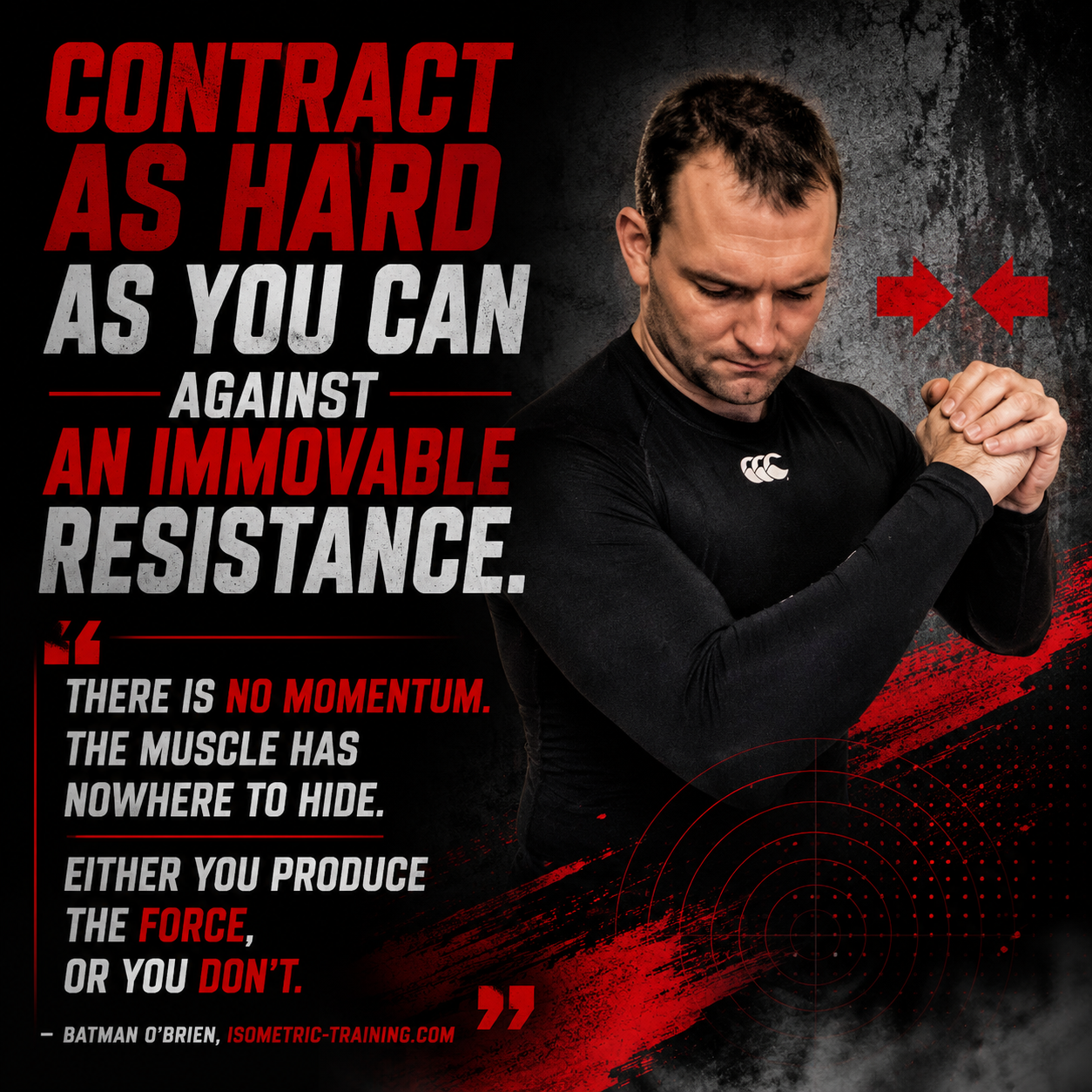
With a properly performed isometric exercise, the instruction is brutally simple:
Contract as hard as you can against an immovable resistance.
There is nowhere for momentum to hide.
Eccentric Mechanical Stress
Eccentric contractions, the resistance being lowered by the fatiguing muscle, are often promoted as an advantage because this eccentric load can produce very high forces.
That's true.
But eccentric loading also creates substantial mechanical stress.
You're not merely producing force; you're controlling the momentum of an external mass.
The heavier the load and the faster the movement, the greater the requirement to decelerate it.
This can be valuable for athletic development, but it's another reason dynamic training can impose stresses beyond the muscular stimulus you're deliberately seeking.
Repetitive Joint Movement
Hey, remember a few paragraphs back I mentioned that the nature of a full-range isotonic motion automatically makes it submaximal, and because it's submaximal, you need a lot of reps and volume?
Yeah...that's an issue. Because even when the load is perfectly controlled, isotonic training repeatedly moves the joint.
A typical set might involve:
10 repetitions × 2 seconds up + 2 seconds down = 40 seconds of loaded movement.
Do that three times a week for months, and you're talking about thousands of cycles.
Again, this isn't inherently harmful. Resistance training can improve joint health.
But if your objective is specifically to stimulate the muscle as intensely as possible while minimising unnecessary movement, then repeated joint excursions aren't necessarily an advantage.
Isometrics essentially remove the movement component while retaining the requirement for muscular force production. All the benefits, none of the joint damage.
Isotonic Cardiovascular and Blood-Pressure Demands
Okay...this one needs some nuance.
Heavy isotonic resistance training can produce very large transient increases in blood pressure, particularly when lifting near maximal loads and performing the Valsalva manoeuvre.
But there's an important misconception here:
Isometrics aren't automatically cardiovascularly safer.
Sustained maximal isometric contractions can also produce substantial blood-pressure responses because contracting muscle compresses blood vessels and increases peripheral resistance. This is why I teach you to never hold your breath during isometrics. You can learn more about Isometrics and blood pressure here
Fatigue Leads to Failure
There's another subtle problem with isotonic training.
As fatigue accumulates, the body becomes increasingly good at finding ways to complete the movement.
The nervous system starts recruiting:
- synergistic muscles
- stabilisers
- momentum
- altered joint positions
- compensatory movement patterns
That's useful if your goal is performing a movement, but it can be counterproductive if your goal is isolating and maximally contracting a particular muscle.
Every careful repetition of these basics with the correct neuromuscular organisation modifies your nervous system. Neurons that fire together repeatedly strengthen their connections through a process known as synaptic plasticity. Over time, these repeated activations produce stable neural networks capable of generating complex movement with remarkable efficiency. But the opposite is also true.
Inprecise, sloppy, compensatory movement repeated will also modify your nervous system. Thus, going to fatigue and making these additional recruitments myelinates the nerve pathways towards failure. You are teaching your body to fail. You are teaching your nervous system that a given muscle and movement is unreliable.
This is one area where my Isolated Isometrics Method as taught in 7 Seconds to A Perfect Body has a particularly interesting advantage. With my system of Isometrics, you're not asking the body to successfully move an object from A to B. You're asking it to produce the maximum possible contraction from a deliberately selected muscle in a deliberately selected position. Thus, you develop the automatic, most efficient method of engaging a muscle and unlocking its full strength.
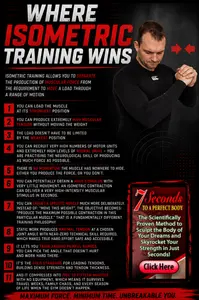
Where Isometric Training Wins
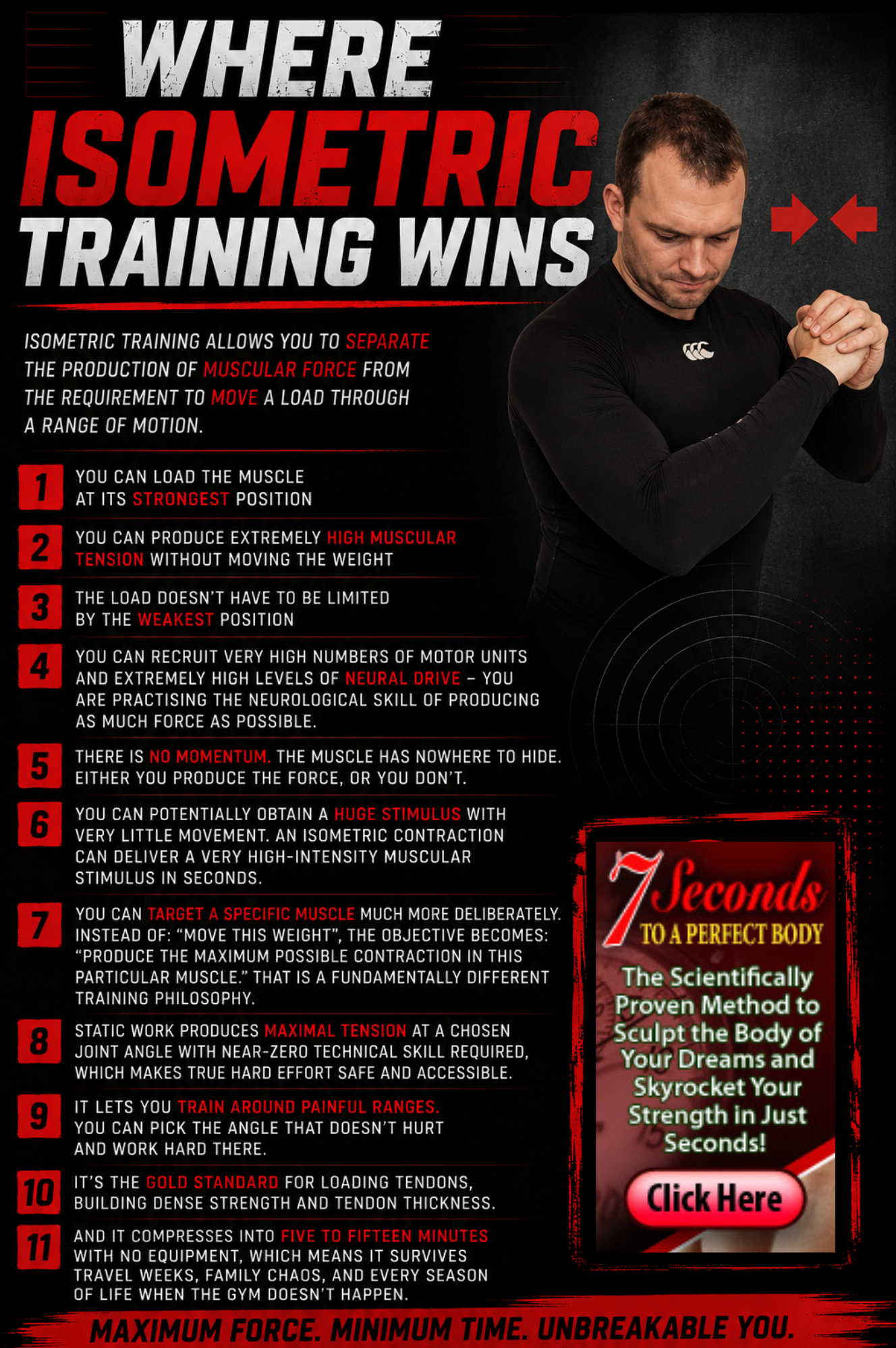
Isometric training allows you to separate the production of muscular force from the requirement to move a load through a range of motion.
- You can load the muscle at its strongest position
- You can produce extremely high muscular tension without moving the weight
- The load doesn't have to be limited by the weakest position
- You can recruit very high numbers of motor units and extremely high levels of neural drive - you are practising the neurological skill of producing as much force as possible.
- There is no momentum. The muscle has nowhere to hide. Either you produce the force, or you don't.
- You can potentially obtain a huge stimulus with very little movement. An isometric contraction can deliver a very high-intensity muscular stimulus in seconds.
- You can target a specific muscle much more deliberately. Instead of: “Move this weight”, the objective becomes: “Produce the maximum possible contraction in this particular muscle.” That is a fundamentally different training philosophy.
- Static work produces maximal tension at a chosen joint angle with near-zero technical skill required, which makes true hard effort safe and accessible.
- It lets you train around painful ranges. You can pick the angle that doesn't hurt and work hard there.
- It's the gold standard for loading tendons, building dense strength and tendon thickness.
- And it compresses into five to fifteen minutes with no equipment, which means it survives travel weeks, family chaos, and every season of life when the gym doesn't happen.
Benefits of Both Worlds
Isometric vs Isotonic Training both have their uses. And I practice both. My physical and neurological strength is built primarily through Isometrics. Learning to use that strength and developing skill in movement is practised through Isotonic training.
Next step: New to static work? Start with the Free Starting Isometrics Beginners Guide.
Want the mechanism? Read Isometric Contractions Explained. A full overview can be found at Isometrics Basics.
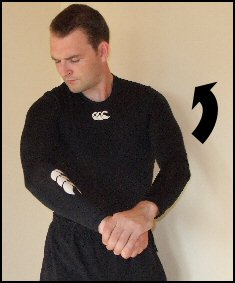
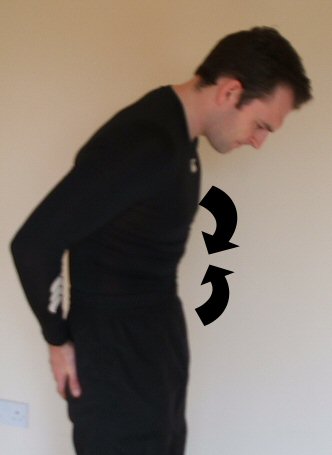
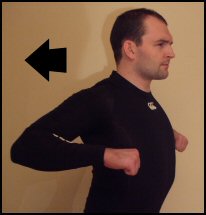
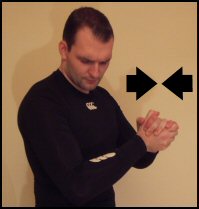
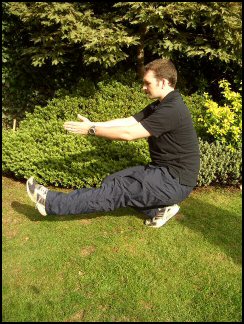
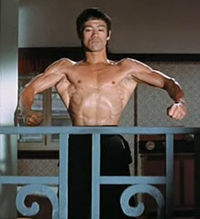
If you want to start practising these now, check out these pages for instructions on a variety of Positional Holds, Maximal Pushes and Pulls and Grip and Carry Hold Isometrics:
You've been reading about the differences between Isometric vs Isotonic Training, you might like to go deeper with these...
Charles Atlas and Isometrics
Charles Atlas and Isometrics - The Worlds Most Perfect Man never taught them
The Benefits of Isometrics
The Benefits of Isometrics - Aside form being the most efficient, productive workout possible what else can Isometrics do?




Paul “Batman” O’Brien is a personal trainer, elite athlete coach, and martial arts medalist who has spent 20+ years teaching science-based, old school, joint-friendly isometric training for busy people. He has written 400+ articles, created 32+ books and programs, and worked with 3,000+ clients. After an MS diagnosis, he used isometrics to get off a walking stick and return to competition for Ireland. Connect with Batman on Facebook. He also makes charity appearances in the Batsuit and folds origami.

My Top Selling Strength & Physique Sculpting Program

Leave your name and email address below to receive Free Access to
Exclusive Isometric Ebook, Instructional Videos and Bonus Exclusive Subscriber Downloads from my 7 Seconds to A Perfect Body Program
Subscribe Now Below!
Recent Articles


-
Isometric vs Isotonic Training
Aug 17, 26 08:47 AM
 Isometric vs isotonic training compared honestly: what each does best, where each falls short, and how a busy adult should choose or combine them.
 -
Isometric Exercise Benefits: What Each Hold Gives You
Aug 14, 26 05:45 PM
 What specific Isometric Exercise Benefits: wall sits, planks, grip holds, and maximal wall presses develop, easily explained
 -
Isometrics Basics: What They Are, Why It Works, Where It Fits
Aug 11, 26 09:23 AM
 Plain-English guide to isometric training: what it is, how it works, why it matters, and where it fits for busy adults who want practical strength.