Isometric Exercise Benefits
- What Each Hold Gives You -
Isometric Exercise Benefits: What Each Type of Hold Delivers
Isometrics are a complete discipline; this means that there are a multitude of Isometric exercise benefits. It's not a one-size-fits-all situation. A wall sit and a maximal wall press are doing very different jobs in your body. And it gets more interesting depending on the type of isometric hold, length and intensity. This page breaks down what each major type of isometric exercise actually gives you, so you can pick holds that match what you're trying to build.
For simplicity's sake, I'm going to break these down into 3 categories:
- Positional Holds
- Maximal Pushes and Pulls
- Grip and Carry Holds

If you want to understand the difference between different types of isometrics, like Overcoming Isometrics, the Paused Isometric Contraction, Yielding Isometrics, Combined Isometrics, etc., check out this article: Examples of Isometric Exercises.
I'd also recommend reading about the differences in Isometric Exercise Hold Times.
Positional Holds: Wall Sits, Planks, and Bridge Holds
These are the endurance-style isometrics, moderate effort sustained for 20 to 60 seconds.
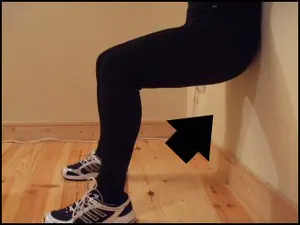
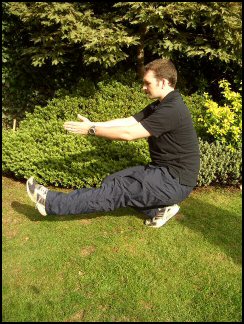
- For example, the wall sit builds quad and knee-tendon strength in the exact position you use for skiing, stairs, getting out of chairs, and lifting from a squat. It's also the exercise most studied for lowering resting blood pressure.
- The forearm plank trains your trunk to do its real job: resisting movement and transferring force - the bracing strength you use every time you carry, shovel, or catch something.
- The glute bridge hold wakes up the hip and posterior chain muscles that go quiet from years of sitting, which pays off directly in a healthier lower back.
These positions all share in the isometric exercise benefits of being stable, nearly impossible to perform dangerously, and they build the kind of strength that shows up when you hold still against a load - which is most of actual adult physical life.
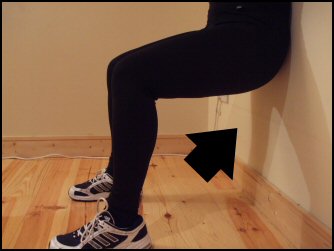 The Isometric wall squat builds unbeatable quad and knee-tendon strengthThe Isometric wall squat builds unbeatable quad and knee-tendon strength
Maximal Pushes and Pulls: Wall Presses and Immovable-Object Work
These are the strength-style isometrics, the near-maximal effort for 7 to 12 seconds against something that will never move. Pressing into a wall, pulling on a towel anchored under your feet, driving up against a heavy door frame.
The benefit here is raw fibre recruitment. Pushing at 90 to 100 per cent effort recruits close to everything the muscle has, without the technique demands or injury risk of maximal barbell work.
This is the closest thing to "training heavy" that requires no equipment at all. It also teaches something subtler: the skill of producing full-body tension on demand - bracing, gripping, and driving as one piece - which is what people mean when they say someone is "farm strong."
Grip and Carry Holds
Squeezing a towel hard, hanging from a bar, or holding a heavy suitcase at your side trains grip and forearm strength. Your forearm strength is hands down (pun intended) one of the best-documented predictors of long-term health outcomes in ageing adults, and the most immediately useful strength there is. Everything you carry, open, hold, or control runs through your hands. This is an essential principle of the martial arts I practice called "te-no-uchi" (meaning everything "inside of the hand") and is the secret of my success as both a budoka and an acupuncturist.
Getting the Benefit: The Effort Standard
None of these exercises delivers isometric exercise benefits with a casual effort. A leaned-against wall sit does little; one where your quads are genuinely working by the second thirty does a lot.
The rule of thumb: positional holds at a seven out of ten, maximal pushes at eight or nine, breathing continuously throughout. Effort is the ingredient. The position is just the container.
Next step: My Free Starting Isometrics Beginners Guide turns these four exercise types into a three-day weekly plan.
For the case for the method overall, see Isometric Training Benefits or the full Isometrics Basics guide.
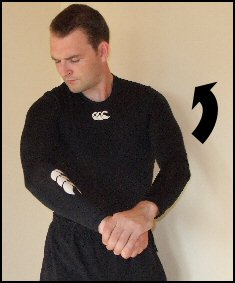
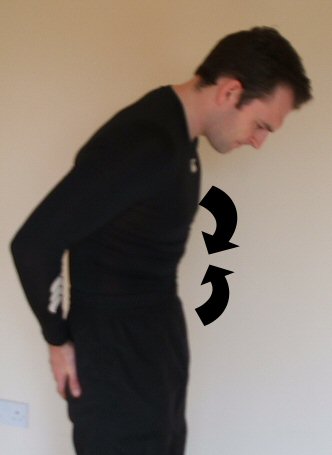
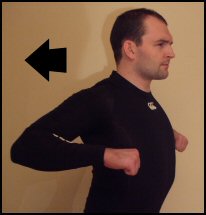
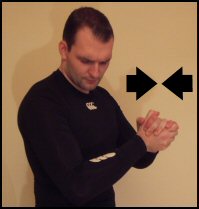
If you want to start practising these now, check out these pages for instructions on a variety of Positional Holds, Maximal Pushes and Pulls and Grip and Carry Hold Isometrics:
You've been reading about Isometric Exercise Benefits, you might like to go deeper with these...
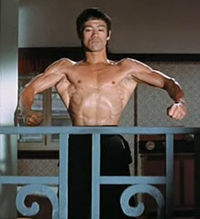
Charles Atlas and Isometrics
Charles Atlas and Isometrics - The Worlds Most Perfect Man never taught them
The Benefits of Isometrics
The Benefits of Isometrics - Aside form being the most efficient, productive workout possible what else can Isometrics do?




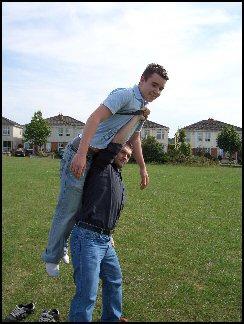
Paul “Batman” O’Brien is a personal trainer, elite athlete coach, and martial arts medalist who has spent 20+ years teaching science-based, old school, joint-friendly isometric training for busy people. He has written 400+ articles, created 32+ books and programs, and worked with 3,000+ clients. After an MS diagnosis, he used isometrics to get off a walking stick and return to competition for Ireland. Connect with Batman on Facebook. He also makes charity appearances in the Batsuit and folds origami.

My Top Selling Strength & Physique Sculpting Program
Leave your name and email address below to receive Free Access to
Exclusive Isometric Ebook, Instructional Videos and Bonus Exclusive Subscriber Downloads from my 7 Seconds to A Perfect Body Program
Subscribe Now Below!
Recent Articles


-
Isometric vs Isotonic Training
Aug 17, 26 08:47 AM
 Isometric vs isotonic training compared honestly: what each does best, where each falls short, and how a busy adult should choose or combine them.
 -
Isometric Exercise Benefits: What Each Hold Gives You
Aug 14, 26 05:45 PM
 What specific Isometric Exercise Benefits: wall sits, planks, grip holds, and maximal wall presses develop, easily explained
 -
Isometrics Basics: What They Are, Why It Works, Where It Fits
Aug 11, 26 09:23 AM
 Plain-English guide to isometric training: what it is, how it works, why it matters, and where it fits for busy adults who want practical strength.